agentage.hu / Articles / Analysis
Single Agent or Multi-Agent? Choosing the Right Setup for News Work
Parallel agents excel at decomposable research tasks while sequential writing demands a single thread to avoid coordination costs.
Decomposable Versus Sequential Newsroom Tasks
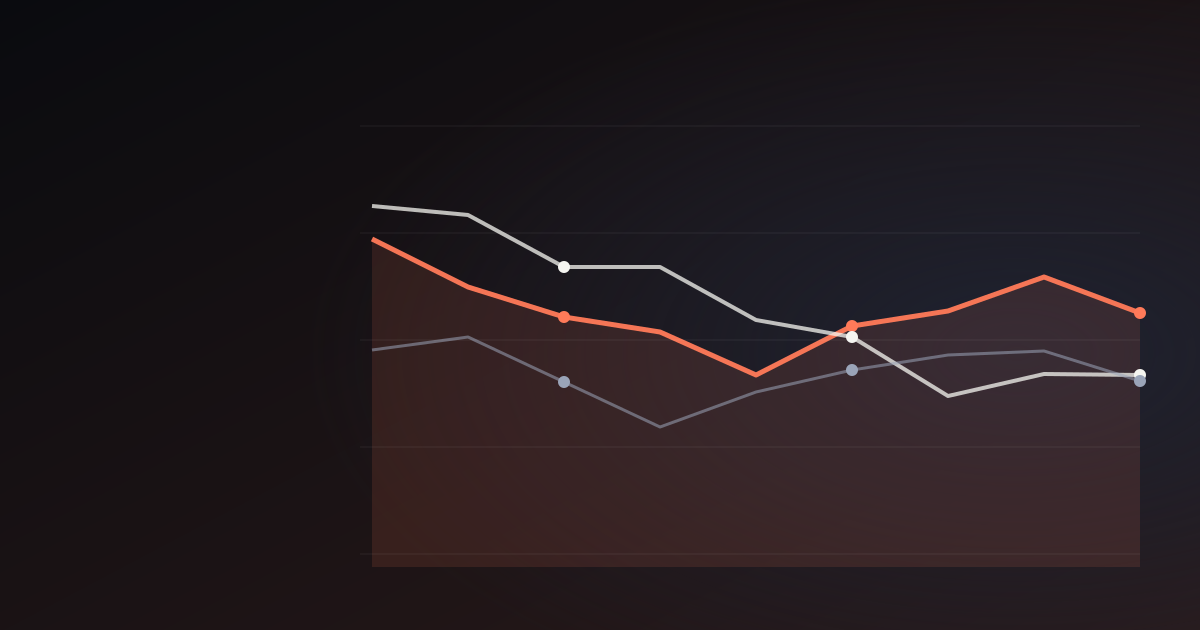
Newsroom workflows split into two distinct categories based on how tasks relate to one another. Some work involves independent research threads where multiple agents can operate simultaneously without interfering. Other work requires strict logical progression where each step depends entirely on the previous one. Recognizing this distinction determines whether you deploy a swarm of agents or a single focused operator.
Decomposable tasks allow for fan-out strategies where different agents tackle separate parts of a problem. A financial report might require one agent to check revenue, another to analyze costs, and a third to scan market trends. These agents work in parallel because their outputs do not depend on each other during the execution phase. The orchestrator simply collects the results and combines them later.
Sequential tasks demand a continuous chain of reasoning that breaks easily when split across multiple actors. Writing a coherent narrative or synthesizing conflicting sources requires a single context window to maintain logical flow. Splitting this process introduces communication gaps where the original intent gets lost in translation between agents. The result is often a fragmented draft that requires significant human rework to fix.
What Parallel Agents Do Well: Sweeps and Monitoring
Parallel agents deliver maximum value when scanning large volumes of data for specific signals. A research team can deploy ten agents to monitor different news wires, social feeds, or academic databases simultaneously. Each agent operates within its own context window, avoiding the token limits that would cripple a single massive search. This approach reduces total execution time by nearly 90 percent for complex queries.
The efficiency gain comes from the ability to run independent searches without waiting for others to finish. One agent might focus on local regulations while another tracks global competitor moves. They do not need to coordinate every keystroke, only the final output format. This autonomy allows the system to cover more ground in less time while maintaining high accuracy on individual data points.
Production playbooks show that multi-agent systems can improve performance by over 80 percent on these broad information gathering tasks. The key is ensuring that the agents do not duplicate work. Deterministic task allocation assigns unique identifiers to each search query. This prevents multiple agents from wasting tokens on the same source or repeating the same findings.
Monitoring systems benefit most from this architecture because they must detect changes across many variables at once. An alert system can trigger different agents to investigate specific anomalies as they appear. The system scales linearly with the number of threats or opportunities identified. Human editors receive a consolidated report rather than raw data streams.
- Deploy parallel agents for wide-source sweeps and real-time monitoring.
- Assign unique task IDs to prevent token duplication across agents.
- Expect up to 90 percent faster execution on broad research queries.
- Use a central orchestrator to collect and format independent outputs.
Why Synthesis Writing Stays Single-Threaded
Writing a synthesis or drafting a cohesive story requires a unified voice and consistent logic. When multiple agents attempt to write sections of a single article, the tone often shifts abruptly between paragraphs. The loss of a single narrative thread makes the final piece feel disjointed and unprofessional. Editors spend more time stitching together the fragments than refining the content.
Research indicates that adding parallel agents to sequential tasks can reduce performance by 39 to 70 percent. The communication overhead between agents disrupts the flow of reasoning. Each handoff introduces a risk of misinterpretation or context loss. A single agent with a long context window preserves the full history of the argument without these friction points.
The best practice is to use parallel agents for gathering the raw material but keep the actual writing to one operator. Let the swarm collect facts, quotes, and data points from various sources. Then pass this compiled evidence to a single agent tasked with weaving it into a narrative. This hybrid approach leverages the speed of parallelism without sacrificing the coherence of the final draft.
Complex coding tasks follow a similar pattern where independent modules can be parallelized but the overall logic remains sequential. A newsroom should treat the writing phase as a critical path item. Any attempt to distribute the creative synthesis across a team of agents usually results in higher costs and lower quality. The single-threaded model remains the gold standard for high-stakes composition.
Coordination Overhead and Token Waste
Token costs rise dramatically when agents spend time talking to each other instead of doing work. Studies show that uncoordinated multi-agent systems can waste 53 to 86 percent of their token budget on redundant efforts. Agents might search for the same information or argue over trivial details before producing any value. This inefficiency turns a powerful tool into a costly liability.
An orchestrator acts as a traffic controller to minimize this waste. It defines clear roles and boundaries for each sub-agent before the work begins. The prompt must specify exactly what each agent should do, what format to use, and what tools to access. Vague instructions lead to confusion and repeated attempts that drain the budget without improving the result.
Deterministic task allocation is the primary defense against duplication. By assigning a unique ID to every sub-task, the system ensures that no two agents work on the same problem. If an agent fails, the orchestrator can reassign the specific task rather than restarting the whole process. This precision keeps the token spend aligned with the actual value generated.
Setting hard limits on iterations and costs prevents runaway loops. A production system must include explicit termination conditions. If an agent cannot solve a problem after a set number of tries, it stops and reports the issue. This safeguard protects the newsroom from unexpected bills and ensures that the system remains predictable and manageable.
- Uncoordinated agents waste 53 to 86 percent of tokens on duplicate work.
- Use an orchestrator to define roles, formats, and tool usage explicitly.
- Implement deterministic task allocation with unique IDs for every job.
- Set hard limits on iterations and costs to prevent runaway loops.
A Decision Rule for Editors
Editors can apply a simple test to decide on the right architecture for any given assignment. Ask if the task can be broken into independent parts that do not rely on each other. If the answer is yes, deploy a multi-agent system with an orchestrator to manage the parallel work. If the answer is no, stick to a single agent with sufficient context capacity.
Consider the value of the output relative to the cost of the tokens. High-value tasks like deep investigative research justify the expense of a multi-agent setup. Routine updates or simple summaries often do not warrant the complexity and overhead. A single agent handles these efficiently without the need for coordination layers or multiple prompts.
Always include a verification step regardless of the architecture used. A dedicated checking agent or a chain-of-verification process can reduce hallucinations by 28 percent. This step is crucial for maintaining editorial standards and ensuring factual accuracy. It serves as the final gate before any content reaches the public eye.
Start small with a pilot project to measure the actual performance gains. Track the token usage, execution time, and quality of the output compared to a human-only baseline. Use these metrics to refine the workflow before scaling up. The goal is to achieve measurable improvements in speed and quality without introducing unnecessary complexity.
- Test if the task is decomposable into independent sub-tasks.
- Match the architecture to the value and complexity of the assignment.
- Include a verification step to reduce hallucinations by 28 percent.
- Run a pilot to measure real-world performance before full deployment.
Key takeaways
- Parallel agents boost performance by up to 90 percent on decomposable research tasks like source sweeps.
- Adding multiple agents to sequential writing tasks degrades quality by 39 to 70 percent due to coordination overhead.
- Uncoordinated multi-agent systems can waste over 80 percent of their token budget on duplicate work.
- A central orchestrator with deterministic task allocation is essential to prevent redundancy and control costs.
- Verification steps reduce hallucinations by 28 percent and should be included in every workflow.
Related questions
When should a newsroom use a single agent instead of multiple agents?
Use a single agent for sequential tasks like writing a synthesis or drafting a narrative. These tasks require a continuous logical flow that breaks when split across multiple actors. Parallel agents introduce communication overhead that can degrade output quality by 39 to 70 percent in these scenarios.
How much can parallel agents improve research speed?
Parallel agents can reduce execution time by nearly 90 percent for complex research queries. They allow multiple independent searches to run simultaneously across different data sources. This approach is most effective for decomposable tasks like monitoring news wires or scanning academic databases.
What is the biggest risk of using multiple agents without an orchestrator?
Without an orchestrator, agents often duplicate work, wasting 53 to 86 percent of the token budget. They may search for the same information or argue over trivial details. Deterministic task allocation and clear role definitions are necessary to prevent this inefficiency and control costs.
AI-assisted: drafted with a language model from the author's research notes, then edited and checked before publication. Author: Zoltán Varga, AI visibility researcher and AI ecosystem architect, Budapest.